
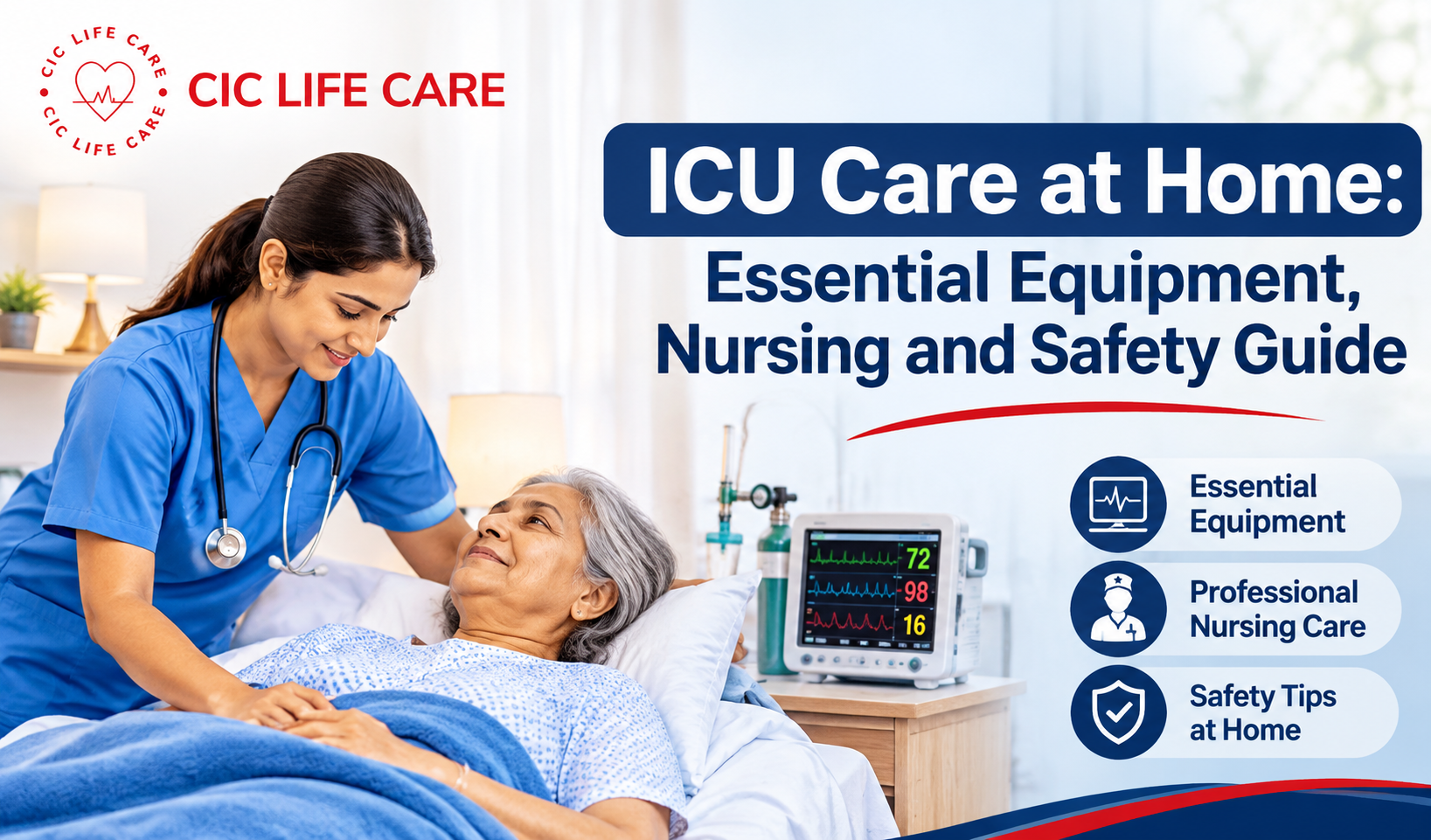
When a family member is discharged from the hospital but still needs regular medical attention, the next few weeks can feel overwhelming. There may be questions about medicines, breathing support, medical equipment, nursing assistance and how to manage everything safely at home. This is where ICU Care at Home may become an option for patients who are medically stable enough to leave the hospital but continue to require specialised care.
Home-based critical care allows selected patients to receive medical and nursing support in a familiar environment. However, it is not simply about bringing hospital equipment into a bedroom. It requires a proper assessment by the treating doctor, trained nursing professionals, suitable equipment and a clear emergency plan.
Understanding these requirements can help families make better decisions and prepare their homes before bringing a patient back from the hospital.
What Does ICU Care at Home Actually Mean?
ICU care at home refers to providing selected intensive nursing and medical support in a patient’s residence. It is generally considered for patients who need continued monitoring or specialised assistance but no longer require all the facilities of a hospital intensive care unit.
The type of care depends on the patient’s diagnosis and recovery progress.
For example, someone recovering from a major surgery may need wound management, medication administration and regular monitoring. A patient with a respiratory condition may require oxygen therapy or ventilator support under medical supervision.
Home-based critical care may be considered for:
- Patients recovering after major surgical procedures.
- Individuals requiring prescribed oxygen or respiratory support.
- Patients with neurological conditions who need specialised nursing.
- Individuals with prolonged recovery following serious illnesses.
- Patients requiring tracheostomy, catheter or feeding tube care.
- People with limited mobility who need continuous nursing assistance.
An important point: Not every patient who needs intensive care can be treated at home. Patients with unstable conditions, rapidly changing symptoms or requirements for hospital-only interventions should remain in an appropriate medical facility.
The treating physician must determine whether home care is clinically suitable.
What Equipment Is Needed for an ICU Setup at Home?
One of the first things families want to understand is the equipment required to create a suitable home-care environment.
There is no standard equipment list for every patient. The requirements depend on the medical condition, prescribed treatment and level of monitoring.
Here are some commonly used medical devices.
| Medical equipment | Why it may be required |
| Adjustable ICU bed | Helps position patients comfortably and supports nursing procedures. |
| Patient monitor | Tracks parameters such as heart rate, blood pressure and oxygen saturation. |
| Oxygen concentrator | Provides supplemental oxygen when prescribed. |
| Medical ventilator | Supports breathing in patients who cannot breathe adequately without assistance. |
| Suction machine | Helps remove airway secretions when clinically required. |
| Infusion pump | Delivers prescribed fluids or medicines at controlled rates. |
| Pulse oximeter | Measures oxygen saturation and pulse rate. |
| Nebuliser | Delivers prescribed inhaled medication. |
| BiPAP or CPAP machine | Provides non-invasive respiratory support for selected patients. |
Not every home ICU patient needs all these devices. For instance, a patient requiring oxygen therapy may not need a ventilator, while someone dependent on mechanical ventilation needs a more specialised arrangement.
Equipment should be selected, installed and checked by qualified professionals. Families should not independently adjust ventilator settings, infusion rates or other medical parameters.
How Should You Prepare a Room for Home ICU Care?
The room should be selected according to the patient’s condition and the equipment required.
It should have enough space for the bed, medical devices, nursing activities and emergency access. Electrical connections, backup power, ventilation and equipment placement should also be assessed.
Keep frequently used medical supplies organised and ensure that nurses can access the patient without unnecessary obstacles.
For patients dependent on electrical respiratory equipment, discuss backup power and equipment-failure arrangements before starting home care.
Why Trained ICU Nurses Are Important at Home
Medical equipment can monitor a patient’s condition, but it cannot replace professional clinical judgement or nursing care.
A trained nurse helps implement the doctor’s treatment plan, observes changes in the patient’s condition and performs prescribed nursing procedures.
Depending on the patient’s requirements, nursing responsibilities may include:
Monitoring vital signs: Checking blood pressure, pulse, temperature, breathing rate and oxygen saturation according to the prescribed schedule.
Medication administration: Giving prescribed medicines at the correct time and maintaining medication records.
Respiratory care: Monitoring prescribed oxygen or ventilator support, checking equipment connections and responding to alarms according to the care plan.
Wound and catheter care: Maintaining hygiene, changing prescribed dressings and observing for signs of infection.
Patient positioning: Helping patients change positions and supporting skin care to reduce complications associated with prolonged bed rest.
Daily hygiene: Assisting with bathing, oral hygiene, changing clothes and other personal care requirements.
Communication: Recording observations and informing the treating doctor about concerning changes.
The nursing arrangement should match the patient’s clinical needs. Some patients may require scheduled nursing visits, while others may need continuous supervision.
How Does Home Ventilator Care Work?
A ventilator is a medical device that helps patients breathe when their lungs or respiratory muscles cannot provide sufficient breathing support independently.
Some patients may continue to need ventilator assistance after hospital treatment. In selected cases, the treating medical team may recommend continuing this support at home.
However, home ventilator care requires careful preparation.
Before discharge, families should understand:
- How the prescribed ventilator operates.
- Which settings must remain unchanged.
- What the different alarms indicate.
- How airway equipment should be maintained.
- What backup arrangements are necessary.
- Whom to contact if the equipment stops working.
Patients with tracheostomies or invasive ventilation may need specialised airway care and nurses with relevant experience.
Families should also receive instructions about emergency situations. A ventilator alarm should never be ignored or silenced without understanding the reason.
Home ventilator care is not appropriate for every patient. Medical stability, caregiver availability, equipment support and emergency access must all be evaluated.
What Safety Precautions Should Families Follow?
Patient safety becomes particularly important when medical treatment moves from a hospital to a residential environment.
At home, families and caregivers must pay attention to hygiene, equipment handling, medication schedules and early signs of complications.
Maintain Proper Hygiene
Patients who have undergone major surgery or have weakened immunity may be more vulnerable to infections.
Simple precautions can make a difference:
- Wash hands before and after patient contact.
- Use gloves and protective equipment when required.
- Clean medical devices according to manufacturer instructions.
- Keep wound-care supplies in a clean, designated area.
- Follow proper catheter and tracheostomy care procedures.
- Dispose of used dressings and medical waste safely.
Follow Oxygen Safety Guidelines
Oxygen supports combustion and must be handled carefully.
Keep oxygen equipment away from smoking, open flames, sparks and heat sources. Avoid oil-based products near oxygen connections unless approved for the specific equipment.
Do not modify oxygen flow settings without medical instructions.
Keep an Emergency Plan Ready
Families should know what to do if a patient develops sudden breathing difficulty, becomes unresponsive, experiences severe bleeding or shows other signs of medical deterioration.
Keep the treating doctor’s contact details, emergency numbers, medical records and hospital transfer arrangements accessible.
If a serious emergency occurs, seek immediate medical assistance rather than waiting for the regular nursing team.
How Much Does ICU Care at Home Depend on?
The cost of home ICU care varies according to the patient’s medical needs and the services required.
There is no single price that applies to every patient because the equipment, nursing hours and level of supervision can differ considerably.
Some important cost factors include:
| Cost factor | How it affects the arrangement |
| Nursing hours | Continuous nursing generally requires more resources than scheduled visits. |
| Medical equipment | Ventilators and advanced monitoring devices may increase costs. |
| Patient condition | Complex medical needs may require specialised nursing skills. |
| Consumables | Dressings, gloves, tubes and other supplies may involve recurring expenses. |
| Equipment maintenance | Servicing and replacement requirements may add to ongoing costs. |
| Doctor consultations | Follow-up visits and medical reviews may involve additional charges. |
Before selecting home nursing care, families should request a clear explanation of what is included in the service package.
Ask whether equipment rental, consumables, nursing replacements, emergency coordination and medical consultations are included or billed separately.
Understanding the complete arrangement helps avoid unexpected expenses.
How to Choose the Right Home ICU Care Provider?
Choosing a home healthcare provider requires more attention than simply comparing prices.
Families should understand the provider’s nursing capabilities, equipment arrangements, emergency support and communication process.
Here are some useful questions to ask:
- Are the nurses qualified and experienced in critical care?
- Can the provider arrange nurses trained for ventilator-dependent patients?
- Is 24/7 nursing care available when clinically required?
- Who supervises the patient’s treatment plan?
- How are nurse replacements managed?
- Who handles equipment problems and maintenance?
- What is the procedure during a medical emergency?
- How are families updated about the patient’s condition?
Also, confirm that the provider can meet the specific requirements documented by the treating physician.
A reliable care arrangement should have clear responsibilities, proper documentation and a defined communication process.
Preparing for a Safe Hospital-to-Home Transition
Moving a patient from a hospital to home requires coordination between the treating doctor, nursing team, equipment provider and family.
Before discharge, collect the discharge summary, prescriptions, investigation reports and instructions for ongoing treatment.
Arrange the necessary equipment and nursing support before the patient arrives. The home-care team should receive a proper clinical handover explaining the diagnosis, allergies, medications, procedures and monitoring requirements.
Family members should also understand the basic care routine, emergency contacts and precautions relevant to the patient’s condition.
Regular follow-up appointments are important because the patient’s requirements may change during recovery. The treating physician should review the care plan and make adjustments when necessary.
How CIC Life Care Supports Families With Home Care?
Managing the care of a seriously ill family member can involve several responsibilities beyond medical treatment. Families may need help coordinating caregivers, arranging replacements, managing communication and addressing day-to-day care issues.
CIC Life Care focuses on supportive in-home care through dedicated care teams and personal care assistance.
Its support approach includes:
- Dedicated care team coordination.
- Assistance with caregiver payroll management.
- Emergency coordination.
- Caregiver replacement management.
- Help with caregiver-related conflicts and concerns.
- Regular communication with families.
CIC Life Care highlights more than 18,000 satisfied clients and over 250 completed services.
Families can contact the organisation 24/7 to discuss their home-care requirements.
For patients requiring specialised critical care, families should specifically confirm the availability of qualified ICU nurses, appropriate equipment, clinical supervision, and emergency arrangements. These requirements should be established before shifting the patient home.
Conclusion
ICU care at home can be a suitable option for selected patients who need continued medical and nursing support after hospital treatment. However, it requires careful planning, appropriate equipment, trained professionals and a clear emergency response system.
The most important decision is not how many machines can be arranged at home, but whether the patient’s medical needs can be managed safely in that environment.
Families should work closely with the treating physician, understand the responsibilities involved and choose a home healthcare provider that can support the prescribed care plan.
Need assistance arranging professional home care for your loved one? Contact CIC Life Care at +91 7696394604. Discuss your requirements with the team and understand the available nursing and caregiver support options.
Frequently Asked Questions
1. Can ICU patients be treated safely at home?
Some medically stable patients can receive selected forms of critical care at home, provided the treating doctor approves the arrangement. Suitable equipment, trained nurses, regular medical supervision and emergency transfer arrangements are essential.
2. What is the difference between ICU care at home and normal nursing care?
Normal home nursing generally involves routine medical assistance, medication administration, wound care and personal support. ICU care at home involves more specialised monitoring, respiratory support or complex nursing procedures depending on the patient’s condition.
3. Does home ICU care require a trained nurse around the clock?
Not every patient requires continuous nursing. However, patients who depend on ventilators, need complex medical interventions or require frequent monitoring may need 24-hour nursing supervision as recommended by their treating doctor.
4. What happens if medical equipment stops working at home?
Families and nurses should follow the equipment-specific emergency instructions and contact the medical equipment provider and treating medical team immediately. Patients dependent on essential respiratory equipment must have appropriate backup arrangements and an emergency hospital transfer plan.
5. How long does a patient need ICU care at home?
The duration depends on the patient’s diagnosis, recovery progress and ongoing medical requirements. Some patients need home-based support for a few days, while others may require longer-term nursing and monitoring. The treating doctor should regularly review the care plan.